14 Detox, and the treatments that follow, can take place in inpatient or outpatient settings:14 Inpatient treatment is any treatment needing the individual to live at the center while getting services. Inpatient programs are typically housed in medical facilities or standalone treatment centers and vary in duration, with longer inpatient treatment often described as property treatment.
Outpatient treatments allow the individual to participate in services during the day and sleep in their own bed at night. Outpatient is generally a better fit for individuals with less extreme dependencies and/or strong social media networks. Outpatient treatments might continue for years and levels of care consist of: Partial hospitalization programs (PHPs).
Extensive outpatient programs (IOPs). A little less extensive than PHPs, IOPs provide between 6 and 9 hours of treatment each week. Requirement outpatient. This is the least time intensive outlet for outpatient care, offering hour-long sessions weekly or month-to-month. Someone who completed inpatient detox might transition to some type of continuous treatment to preserve their momentum, such as residential treatment, PHP, IOP, or basic outpatient.
Another option for people currently in or ended up with treatment is support groups. Support system are meetings arranged and run by people in recovery that concentrate on fellowship, continued concentrate on sobriety, and providing back to others as a way to stay drug-free. For numerous, dependency treatment is a lifelong process with ongoing expert treatment and aftercare choices to keep healing.
3 Whether you think dependency is an illness or not, everyone can agree that addiction is a severe problem that negatively impacts the lives of individuals utilizing substances in addition to individuals in their lives. The suffering that occurs with dependency can be immense, however treatment provides a ray of wish for the future.
( 2018 ). Grant, J. E., Potenza, M. N., Weinstein, A., & Gorelick, D. A. (2010 ). Introduction to Behavioral Addictions. The American Journal of Drug and Alcohol Abuse, 36( 5 ), 233241. http://doi. org/10. 3109/00952990. 2010.491884. fo National Institute on Substance Abuse. (2018 ). Holden, T. (2012 ). Dependency is not an illness.
Top Guidelines Of Where To Go For Help With Drug Addiction
Heyman, G. M. (2013 ). Addiction and Choice: Theory and New Data. Frontiers in Psychiatry, 4, 31. National Institutes of Health. (n. d.). American Psychiatric Association. (2013 ). Diagnostic and statistical handbook of mental illness (5th ed.). Arlington, VA: American Psychiatric Publishing. National Institute on Drug Abuse. (2018 ).
( 2016 ). National Institute on Substance Abuse. (2018 ). Substance Abuse and Mental Health Solutions Administration. (2016 ). National Institute on Substance Abuse. (2018 ). Natioasnal Institute on Alcoholic Abuse and Alcohol Addiction. (n - which neurotransmitter is involved in drug addiction. d.). Drug Abuse and Mental Health Providers Administration. (2015 ). Detoxing and Drug Abuse Treatment.
Physical reliance is specified as a state of adjustment, manifested by a drug class-specific withdrawal syndrome produced by abrupt cessation, fast dose decrease, decreasing blood level of the drug compound, and/or administration of an antagonist. According to the Stedman's Medical Dictionary, the withdrawal or abstaining syndrome refers to "a constellation of physiologic changes undergone by people or animals that have ended up being physically based on a drug compound or chemical who are quickly denied of that compound." Physical reliance might accompany the chronic use of any drug substance, legal or unlawful, even when taken as prescribed.
Withdrawal symptoms understood to appear after cessation of drugs of abuse in people may consist of sleeping disorders, hallucinations and convulsions (barbiturates), anxiety, vomiting and diarrhea (opioids), irritability, shaking, queasiness (alcohol), headaches, and problems in concentration (nicotine). Nevertheless, some drugs of abuse do not produce specific withdrawal signs upon cessation (cocaine, marihuana; methylphenidate ).
These compounds and their resulting potential adverse effects include corticosteroids (nausea, lethargy, and depression ); steroids (tiredness, loss of libido, and depressed mood ); antidepressants (dizziness, headache, nausea, and sleepiness ); and cardiovascular medicines (beta blockers: beta-adrenergic hypersensitivity [21,16], to name a few. For these drug compounds, discontinuation of treatment requires mindful tapering (progressive diminution of the healing dose) in order to prevent a withdrawal syndrome.
g., dysphoria, anxiety, irritability) when access to the drug or stimulus is prevented". Nevertheless, physical dependence can lead to yearning for the drug to relieve or overcome the unfavorable withdrawal symptoms upon cessation.
All About Which Sequence Describes The Path To Drug Addiction
Drugs are chemical substances that can change how your body and mind work. They include prescription medicines, over the counter medicines, alcohol, tobacco, and controlled substances. Substance abuse, or misuse, includes Using prohibited compounds, such as Misusing prescription medicines, including opioids. This implies taking the medications in a different method than the health care provider recommended.
For instance, rather of swallowing your tablets, you might squash and after that snort or inject them. Utilizing the medication for another function, such as getting high Misusing over the counter medications, including using them for another function and using them in a various way than you are supposed to Substance abuse is unsafe.
It can injure the individuals around you, consisting of buddies, families, kids, and coming babies. Substance abuse can likewise cause addiction. Drug addiction is a persistent brain disease. It causes a person to take drugs consistently, regardless of the harm they trigger. Duplicated drug usage can change the brain and cause dependency.
This means that people in recovery are at danger for taking drugs again, even after years of not taking them. Not everybody who uses drugs ends up being addicted. Everyone's bodies and brains are different, so their reactions to drugs can likewise be various. Some individuals might become addicted quickly, or it may take place over time.
Whether someone becomes addicted depends on lots of factors. They consist of hereditary, environmental, and developmental elements. Different threat elements can make you more likely to end up being addicted to drugs, including Individuals can respond to drugs in a different way. Some people like the feeling the very first time they attempt a drug and desire more.
People who have unattended psychological health issue, such as depression, anxiety, or attention deficit/hyperactivity condition (ADHD) are more most likely to end up being addicted. This can happen since drug usage and psychological health issue impact the very same parts of the brain. Also, people with these issues may utilize drugs to attempt to feel much better.
Some Of What Are Some Ways That Each State Can Help Decrease Drug Abuse And Addiction?
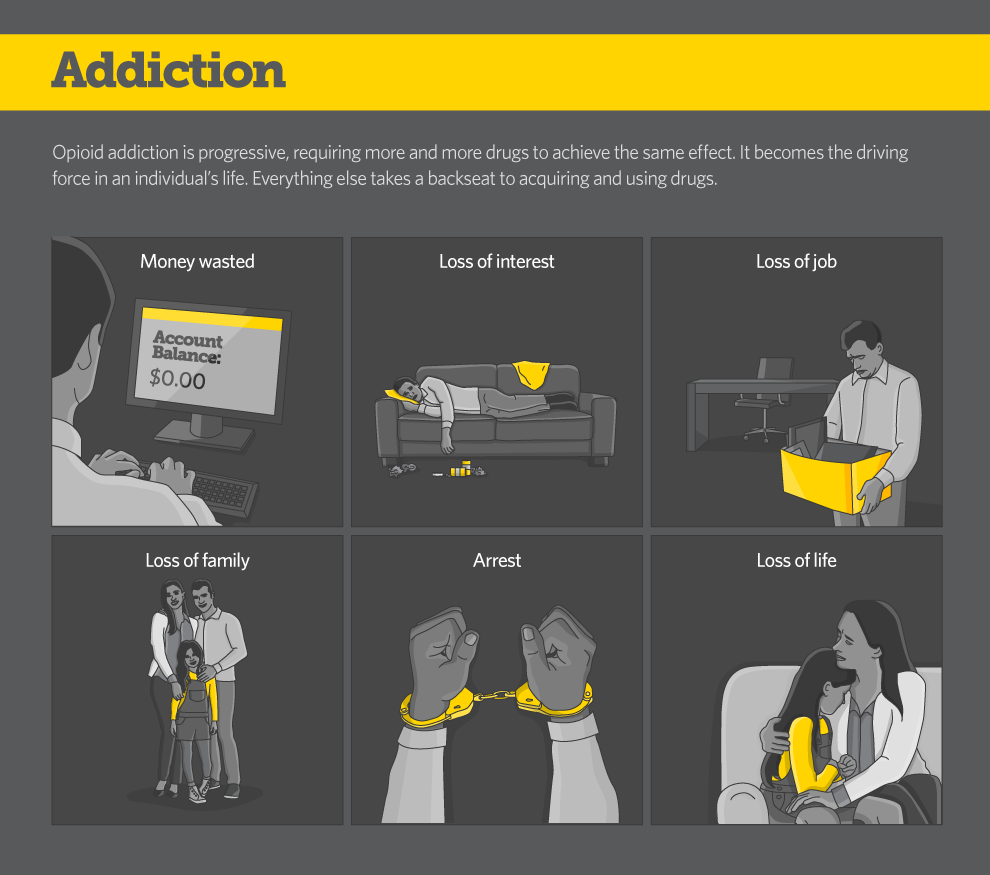
You may utilize drugs to get your mind off these issues. They might encourage you to try drugs. When kids utilize drugs, it affects how their bodies and brains end up growing. This increases your possibilities of ending up being addicted when you're a grownup. Indications that somebody has a drug issue consist of Changing friends a lot Spending a great deal of time alone Disliking favorite things Not looking after themselves - for instance, not taking showers, altering clothes, or brushing their teeth Being truly worn out and sad Eating more or eating less than normal Being really energetic, talking quick, or stating things that do not make good sense Remaining in a tiff Rapidly altering in between feeling bad and feeling good Sleeping at weird hours Missing out Rehab Center on crucial visits Having problems at work or at school Having issues in individual or household relationships Treatments for drug addiction include therapy, medicines, or both.